Not All TVs Are Safe—But They Can Be
In homes, TVs sit on stands or hang on walls without much worry. But in hospitals, prisons, psychiatric units, and public spaces, a regular TV setup can become a real safety concern.
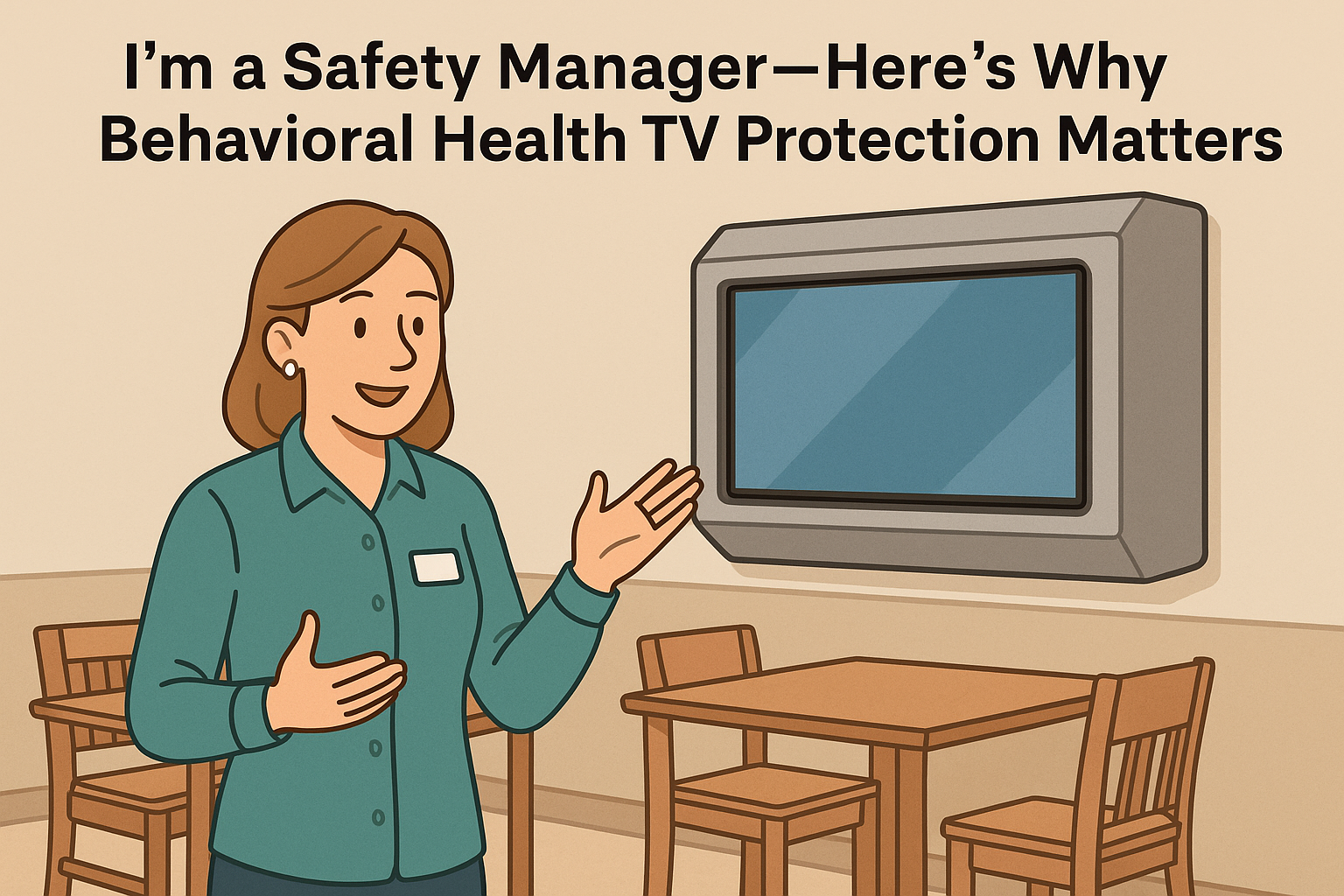
That’s where a TV protective enclosure comes in. It’s not just about stopping damage—it’s about controlling risk, protecting people, and extending the life of your equipment.
Whether you’re managing a mental health facility, a detention center, or a high-traffic commercial area, a protective TV enclosure gives you peace of mind and long-term protection.
What Is a TV Protective Enclosure?
A TV protective enclosure is a durable housing unit that surrounds a flat-screen TV. It shields the screen and hardware from:
-
Physical damage
-
Tampering
-
Moisture, dust, and dirt
-
Self-harm risks (in behavioral health environments)
-
Vandalism or theft (in public settings)
Made from heavy-duty materials like steel or polycarbonate, these enclosures allow the TV to function normally—while being fully protected from environmental and human impact.
Who Uses TV Protective Enclosures?
These enclosures are widely used in:
-
Hospitals and psychiatric wards
-
Prisons and detention facilities
-
Public waiting areas and transit stations
-
Retail stores and malls
-
Schools, gyms, and community centers
-
Stadiums and entertainment venues
In short, any location where a TV could be damaged, misused, or accessed without permission.
Benefits of Using a TV Protective Enclosure

When you install one of these units, you’re not just protecting the TV. You’re creating a safer, more durable, and more efficient environment.
Here are the top benefits:
1. Damage Prevention
No more cracked screens, ripped cables, or broken mounts. Enclosures absorb impact and prevent costly damage.
2. Safety Enhancement
Especially in mental health units or correctional settings, enclosures eliminate ligature risks, sharp edges, and tampering opportunities.
3. Longevity of Equipment
By shielding from dust, moisture, or tampering, your TVs last longer—meaning less downtime and fewer replacements.
4. Clean, Professional Appearance
Protective enclosures come in sleek, powder-coated finishes and can be designed to blend into clinical or public spaces.
5. Compliance With Safety Standards
In many industries, protective TV setups are not optional—they’re required for inspection compliance and accreditation.
What to Look for in a TV Protective Enclosure
If you’re sourcing enclosures, consider the following features:
-
Only authorized staff can open the unit
-
Tamper-Proof Locks: Only authorized staff can open the unit
-
Shatterproof Front Panel: Usually made of thick polycarbonate to protect the screen
-
Built-In Ventilation: Keeps the TV cool without creating access points
-
Anti-Ligature Design: No gaps, sloped tops, and no tie-down points
-
Heavy-Duty Mounting: Resists force, pulling, or removal attempts
-
Custom Sizing: Should fit modern flat screens from 24″ to 75″ and beyond
Many providers offer bespoke builds to fit your exact TV make, room layout, and security needs.
Real-World Example: Reduced Risk and Cost
A behavioral health facility in Arizona reported:
“Before we installed TV protective enclosures, we had to replace damaged TVs every few months. Staff also had concerns about patient safety. Since installing anti-ligature enclosures, those issues have disappeared.”
That kind of risk reduction speaks for itself—and the cost savings follow.
Design Considerations for Professionals
If you’re an architect, safety manager, or facilities director, consider the long-term value of specifying TV protective enclosures at the design phase. Integrating these solutions from the start avoids:
-
Emergency retrofits
-
Failed safety audits
-
Replacing TVs every quarter
-
Potential lawsuits from unsafe room environments
Enclosures can also be used outdoors (with waterproof models), or in dusty industrial environments, adding even more flexibility.
Final Thought: Protection Isn’t Optional Anymore
TVs play a critical role in entertainment, communication, and patient well-being—but only if they’re safe, secure, and durable.
A TV protective enclosure transforms a vulnerable device into a controlled, long-lasting fixture—whether in a mental health ward, a holding cell, or a public corridor.
Protect Your Equipment. Protect Your People.
Looking to reduce damage, improve safety, and comply with regulatory standards?
A TV protective enclosure is one of the simplest, smartest investments you can make. Don’t wait until there’s a problem—prevent it from day one.